
The Backbone of Reliable Business Operations

The Backbone of Reliable Business Operations Introduction Service jobs form the foundation of today’s business and household operations. From maintaining essential equipment to supporting advanced technologies, service-based work ensures continuity, safety, and efficiency. As industries evolve and customer expectations rise, service jobs are no longer limited to manual tasks. They now rely heavily on structured processes, skilled professionals, and digital systems. What Is a Service Job? A service job is a type of work where value is delivered through expertise, maintenance, support, or problem-solving, rather than the production of physical goods. The outcome of a service job is improved functionality, reliability, or performance of an existing system or asset. Service jobs are not just support roles; they are the backbone of modern living and business operations. Every system, machine, and technology we depend on requires regular attention to function smoothly. Service professionals ensure that these systems remain reliable, safe, and efficient over time. 1. Essential for Daily Operations Homes, offices, hospitals, and industries depend heavily on equipment such as air conditioners, electrical systems, medical devices, security setups, and IT infrastructure. These systems are used every day and are subject to wear and tear. Service jobs ensure that minor issues are identified and resolved before they become major problems. For example, a small electrical fault in an office can lead to power failure, work delays, or even safety hazards if left unattended. Regular servicing helps maintain uninterrupted daily operations and prevents unexpected breakdowns. In critical environments such as hospitals and manufacturing units, service jobs are especially vital because system failures can directly affect lives and productivity. 2. Cost Efficiency One of the biggest advantages of service jobs is cost control. Regular maintenance and timely repairs help extend the lifespan of equipment and assets. When issues are addressed early, businesses and individuals can avoid expensive replacements and emergency repairs. For example, servicing a machine periodically costs far less than replacing it after a complete failure. Service jobs help detect hidden problems, reduce long-term expenses, and allow better financial planning. This makes service-based maintenance a smart and economical choice for both households and organizations. 3. Business Continuity Unplanned downtime can severely impact business operations. When systems fail, work stops, deadlines are missed, and customer trust can be affected. Service jobs play a key role in ensuring business continuity by keeping systems operational at all times. In sectors such as healthcare, logistics, manufacturing, and IT, even a short disruption can lead to significant losses. Service professionals help minimize downtime by providing quick response, efficient problem-solving, and preventive maintenance. Their role ensures that businesses continue to operate smoothly without interruptions. 4. Safety and Compliance Many service jobs involve strict safety standards and regulatory requirements. Electrical systems, medical equipment, elevators, and industrial machinery must be maintained according to legal and safety guidelines. Professional servicing ensures that equipment meets compliance requirements and operates safely. This reduces the risk of accidents, injuries, and legal issues. Service jobs also help organizations stay updated with industry standards and avoid penalties related to non-compliance. Safety-focused service work protects not only assets but also employees, customers, and the public. 5. Customer Satisfaction Customer experience is strongly influenced by how quickly and professionally service issues are handled. A prompt response, clear communication, and reliable service create trust and confidence. Service jobs allow businesses to build long-term relationships with customers by consistently meeting their expectations. When customers know that support is readily available and problems will be resolved efficiently, they are more likely to remain loyal and recommend the service to others. How Modern Service Jobs Work Service jobs today are no longer unorganized or reactive. They follow a structured, systematic, and technology-driven approach to ensure accuracy, transparency, and efficiency. Service Request The process begins when a customer raises a service request. This may involve reporting a problem, scheduling routine maintenance, or requesting a new installation. Clear documentation of the request helps in understanding the exact requirement and urgency. Job Assessment Once the request is received, the service requirement is carefully analyzed. This includes identifying the nature of the issue, the skills needed, required tools, spare parts, and estimated time for completion. Proper assessment ensures that the service team is fully prepared before execution, reducing delays and repeat visits. Scheduling and Assignment Based on the assessment, the job is scheduled and assigned to a suitable technician. Factors such as availability, expertise, location, and priority are considered to ensure faster and more effective service delivery. This step helps optimize resources and improves response time, which is crucial for customer satisfaction. Service Execution During this stage, the technician performs the service task according to defined standards and best practices. The focus is on accuracy, safety, and quality. Any additional issues identified during execution are addressed promptly to ensure complete resolution. Verification and Closure After the service is completed, the work is reviewed to ensure that the issue has been fully resolved. Customer confirmation is obtained, and service records are updated for future reference. Proper job closure helps maintain transparency, accountability, and service history, which are important for ongoing support and continuous improvement. Industries Supported by Service Jobs Home and Commercial Services Air conditioning, appliances, plumbing, electrical systems, and facility maintenance are essential for everyday comfort and productivity. Technology and IT Services Support for computers, mobile devices, networks, and security systems ensures uninterrupted digital operations. Industrial and Equipment Services Maintenance of machinery, logistics equipment, batteries, and power systems supports industrial efficiency. Healthcare and Medical Equipment Services Regular servicing ensures accuracy, safety, and compliance in medical environments. Energy and Infrastructure Services Solar systems, power solutions, and water purification services support sustainable development. Key Advantages of Service Jobs 1. Continuous Demand Service jobs remain relevant regardless of market conditions. Equipment and systems always require maintenance and support. 2. Skilled Workforce Development Service roles promote technical skills, problem-solving abilities, and hands-on expertise. 3. Scalability Service operations can be expanded easily by adding technicians, tools, and digital processes. 4. Customer-Centric Approach Direct interaction with customers helps service providers understand needs
A Complete Guide to ERP Systems

A Complete Guide to ERP Systems Everything you need to know about Enterprise Resource Planning software and how it integrates and manages core business processes. What is ERP? ERP (Enterprise Resource Planning) is a business management system that brings together all core operations such as finance, warehouse management, purchasing, sales, inventory, and daily operations into one integrated platform. Instead of using multiple disconnected software tools, an ERP system allows businesses to manage everything from a single system. This centralised approach improves accuracy, increases efficiency, and provides real-time access to data across the organisation. Table of content: What Are the Common Functions of ERP Systems? Enterprise Resource Planning (ERP) systems are designed to unify multiple business processes into a single, integrated platform. By centralizing data and automating workflows, ERP systems enable organizations to manage resources efficiently and make data-driven decisions. The key functions of ERP systems include: Finance and Accounting: ERP automates financial operations such as general ledger management, accounts payable and receivable, budgeting, and expense tracking. Real-time financial reporting ensures transparency and compliance, allowing companies to monitor cash flow, detect discrepancies, and make strategic decisions quickly. Supply Chain Management (SCM): ERP optimizes procurement, inventory management, production planning, and logistics. It enables businesses to forecast demand accurately, maintain optimal stock levels, reduce wastage, and ensure timely delivery, improving overall supply chain efficiency. Customer Relationship Management (CRM): ERP integrates CRM capabilities to maintain detailed customer profiles, track interactions, manage leads, and automate sales and support processes. This enhances customer satisfaction, strengthens relationships, and helps businesses retain clients while identifying opportunities for upselling and cross-selling. Manufacturing and Production Management: ERP supports production scheduling, resource allocation, quality control, and workflow optimization. It ensures that manufacturing operations are efficient, reduces downtime, and helps maintain consistent product quality. Reporting and Analytics: ERP systems provide real-time dashboards, key performance indicators (KPIs), and customizable reports. These insights enable managers to make informed decisions, track performance trends, identify bottlenecks, and plan for future growth effectively. How Can an ERP Software Benefit an Organization? ERP software delivers transformational benefits to organizations of all sizes. Beyond simple automation, it reshapes business operations for efficiency, scalability, and growth. Improved Operational Efficiency: By automating repetitive and manual tasks such as data entry, payroll processing, and inventory updates, ERP reduces errors and frees up employee time for strategic activities. Enhanced Collaboration: Centralized data ensures that all departments access the same information, reducing miscommunication, duplication of efforts, and operational delays. Cost Optimization: ERP provides detailed insights into resource utilization, procurement, and inventory management, helping businesses minimize waste, negotiate better with suppliers, and lower operational costs. Informed Decision-Making: Real-time analytics and reporting allow managers to track KPIs, monitor trends, and forecast outcomes. This data-driven approach reduces risk and improves strategic planning. Scalability and Flexibility: ERP systems are designed to grow with the organization. As business needs evolve, additional modules or users can be integrated seamlessly, supporting expansion and diversification. Compliance and Security: ERP ensures regulatory compliance through automated reporting and secure data storage. Access controls, audit trails, and encryption safeguard sensitive financial, employee, and customer information. How to Find the Right ERP for You Choosing the right ERP system is critical because it directly impacts operational efficiency, cost savings, and business growth. A structured approach ensures the selected solution meets organizational needs: Assess Your Business Needs Start by closely examining how your current processes function across departments. Identify inefficiencies, delays, or manual tasks that affect productivity. Understand both present challenges and future goals to avoid short-term solutions. This clarity helps determine which ERP features are truly necessary. Define Budget and ROI Expectations ERP investment goes beyond software licensing and includes implementation, training, and long-term support. Setting a realistic budget helps avoid unexpected costs during deployment. Evaluate how the ERP will improve efficiency, reduce errors, or save time. A clear ROI expectation ensures the investment delivers measurable value. Check for Scalability and Flexibility Business needs change as organizations grow, making scalability essential. The ERP should easily support additional users, new departments, or expanded operations. Flexible systems allow modifications without major disruptions. This ensures the solution remains effective over the long term. Evaluate Features and Modules Every business requires a different combination of ERP modules. Compare systems based on ease of use, reporting strength, and accessibility across devices. Ensure essential functions align with daily operations. Choosing the right features prevents overcomplication and improves adoption. Consider Vendor Support and Reputation A strong vendor relationship plays a critical role in ERP success. Reliable support ensures smooth implementation and quick resolution of technical issues. Training and regular updates keep the system efficient and secure. A proven vendor reduces operational risks significantly. Test Usability User adoption determines how successful an ERP system will be. Demos and trials help evaluate ease of navigation and task execution. An intuitive interface minimizes training time and errors. Simple usability encourages employees to use the system effectively. Review Customization Options Every industry follows unique workflows that may not fit standard ERP models. Customization allows the system to align with specific business requirements. The ability to adjust features without complex coding saves time and cost. This ensures the ERP supports real operational needs. The Importance of ERP in Modern Business Operations Modern businesses operate in environments where speed, accuracy, and adaptability are critical. ERP systems have become a foundational tool because they create a single operational backbone that connects every department and function. Instead of managing disconnected systems, organizations rely on ERP to bring structure, consistency, and visibility to their daily operations. One of the key reasons businesses depend on ERP is process standardization. ERP systems establish uniform workflows across departments, ensuring that tasks are completed in a consistent and controlled manner. This reduces confusion, improves accountability, and helps organizations maintain quality standards as they grow. Another important factor is improved resource planning. ERP enables businesses to monitor how time, manpower, materials, and finances are being used. With clear visibility into resource consumption, organizations can plan more accurately, avoid overuse or shortages, and improve overall productivity. ERP
HRMS Software

HRMS Made Simple Human Resource Management Systems (HRMS) streamline and automate core HR functions like payroll, attendance, and employee management. Introduction to HRMS Systems : Human Resource Management Systems (HRMS) are increasingly being adopted by organisations to manage complex workforce operations efficiently. As businesses continue to grow and evolve, traditional manual HR practices are found to be inefficient, time-consuming, and prone to errors. To address these challenges, HRMS software is implemented to automate and centralise HR functions. HRMS is designed to manage employee data, payroll processing, attendance tracking, recruitment workflows, performance management, and statutory compliance within a single digital platform. Through automation and data integration, HR operations are streamlined, and organisational productivity is enhanced. Table of Content: What Are the Common Functions of HRMS Systems? Employee Information Management HRMS acts as a centralized repository for all employee records, including personal details, job roles, compensation history, and documents. This ensures accuracy, quick access, and consistent data across departments. Centralization also reduces dependency on manual files and scattered spreadsheets. Attendance and Leave Management HRMS tracks working hours, shifts, overtime, and leave balances in real time. Employees can apply for leave through the system, while managers can approve requests without delays. This automation improves transparency and ensures accurate payroll calculations. Payroll Processing and Compliance Payroll modules calculate salaries, deductions, bonuses, and statutory contributions automatically. The system ensures timely salary disbursement while adhering to tax and labor regulations. Built-in compliance features reduce errors and legal risks. Recruitment and Onboarding HRMS streamlines hiring by managing job postings, candidate data, interview scheduling, and selection workflows. Once hired, onboarding tools help new employees complete documentation and understand company policies smoothly. Appraisal Management Performance tracking tools allow goal setting, continuous feedback, and structured appraisals. Managers can evaluate employee contributions objectively using measurable criteria. This encourages accountability and professional growth. Claim Management Claim management in HRMS simplifies the process of submitting, reviewing, and approving employee expense claims. Employees can upload bills and track claim status digitally without paperwork. Automated validation ensures policy compliance and reduces errors or delays. This improves transparency and speeds up reimbursements for employees. How Can an HRMS Software Benefit an Organization? Reduced Administrative Workload HRMS automates repetitive HR activities such as attendance tracking, payroll processing, and leave approvals. This significantly reduces dependency on manual paperwork and spreadsheets. HR teams can complete routine tasks faster with fewer errors. As a result, they can focus more on employee development and strategic HR planning. Improved Accuracy and Consistency Automated workflows eliminate calculation mistakes commonly caused by manual data entry. Centralized records ensure uniform data is used across payroll, attendance, and compliance. This consistency improves reporting accuracy and reduces discrepancies. Reliable data builds confidence in HR and financial operations. Enhanced Employee Experience HRMS empowers employees through self-service access to HR information and requests. They can view payslips, apply for leave, and update details without HR intervention. This reduces response delays and improves transparency. A smooth experience increases employee satisfaction and engagement. Stronger Decision-Making Support HRMS provides real-time dashboards and detailed workforce reports. Management gains clear visibility into performance, attendance, and workforce costs. Accurate insights support faster and smarter decisions. This data-driven approach reduces reliance on assumptions. Better Compliance and Data Security Sensitive employee information is protected through role-based access and secure storage. HRMS maintains audit trails and compliance records automatically. This reduces the risk of legal penalties and data breaches. Secure systems build trust and ensure regulatory adherence. How to Find the Right HRMS for You Understand Your HR Challenges Begin by identifying gaps in your current HR processes. Issues like payroll delays, attendance mismatches, or manual appraisals indicate automation needs. Understanding challenges helps define clear expectations. This ensures the HRMS solves real operational problems. Define Functional Requirements List the HR functions that are critical to your business operations. Focus on modules that align with your workforce size and processes. Avoid selecting features that add complexity without value. A focused approach improves system adoption. Evaluate Ease of Use User-friendly design plays a major role in HRMS success. Employees and managers should navigate the system without extensive training. Simple interfaces improve daily usage and reduce errors. Ease of use ensures faster acceptance across teams. Check Scalability A good HRMS should grow alongside your organization. It must handle increased users, data volume, and new HR processes smoothly. Scalable systems prevent frequent replacements. This protects long-term investment value. Assess Vendor Support Implementation support determines how smoothly the system is adopted. Reliable vendors provide training, updates, and quick issue resolution. Ongoing support ensures uninterrupted operations. Strong assistance reduces long-term system risks. Review Cost vs Value Evaluate costs beyond licensing, including implementation and maintenance. Compare these costs with productivity improvements and time savings. The right HRMS should deliver measurable returns. Value matters more than the lowest price. The Business Value of HRMS Software Centralized Workforce Management HRMS consolidates all employee information into a single, organized system. This removes dependency on multiple tools and scattered records. HR, finance, and leadership teams can access consistent data when needed. Centralization improves coordination and operational clarity. Operational Efficiency and Speed Automated HR workflows reduce delays in routine processes like approvals and payroll. Tasks that once required manual follow-ups are completed faster. This improves turnaround time across departments. Overall productivity increases with streamlined operations. Strategic Workforce Planning HRMS offers clear insights into employee performance, skills, and work patterns. Leaders can identify talent gaps and future staffing needs more accurately. This supports informed hiring and training decisions. Workforce planning becomes proactive rather than reactive. Regulatory Compliance HRMS maintains structured records aligned with statutory and organizational requirements. Automated documentation supports accurate reporting and timely submissions. Consistent compliance reduces administrative complexity. Businesses can focus more on growth initiatives. Employee Engagement and Transparency Employees gain easy access to HR information through self-service tools. Clear visibility into attendance, payroll, and policies builds trust. Transparent processes encourage accountability. Engaged employees contribute more effectively to organizational goals. Adaptive HRMS for you Adaptive HRMS is designed to meet the evolving needs of modern businesses by simplifying
Integrated Customer & Sales Systems
Modern businesses rely on speed, automation, and accurate customer insights to stay competitive. Without a unified view of customer interactions and sales activities, companies often face delays and missed opportunities. Adaptive BizApp Systems Private Limited provides an integrated customer & sales management solution that centralizes all business data. This system streamlines lead management, automates follow-ups, and improves collaboration across teams. With real-time analytics and automated workflows, businesses can achieve higher productivity and stronger customer relationships. In today’s fast-moving digital world, Adaptive BizApp’s integrated platform is essential for sustainable growth and success. 1. Centralized Customer Data Improves Decision-Making: When customer information is scattered, teams rely on assumptions instead of facts.Adaptive BizApp Systems Private Limited unifies all customer interactions, history, and preferences in one place.This gives teams real-time clarity and eliminates the confusion caused by multiple disconnected tools.Decision-making becomes faster, smarter, and backed by accurate data.The result is stronger customer understanding and more effective business actions. 2. Predictable Sales Pipeline for Better Forecasting: A standardized pipeline helps teams track each deal with consistency and accuracy.Adaptive BizApp Systems Private Limited provides clear stage definitions and real-time updates on progress.This removes guesswork and builds trustworthy sales forecasts for leadership.With better visibility, teams can prioritize the right deals at the right time.Companies gain predictability, stability, and confidence in future revenue planning. 3. Automation Reduces Manual Errors: Manual tasks like reminders, routing, and follow-ups often cause delays and mistakes. Adaptive BizApp Systems Private Limited automates these workflows to maintain accuracy.Automation ensures tasks happen on time, every time, without human oversight. This improves productivity and frees teams to focus on strategic work. 4. Customer Retention Becomes Easier: Retention improves when businesses remember customer needs, issues, and past interactions. Adaptive BizApp Systems Private Limited stores this full history for personalized support and renewals. Teams can respond faster and deliver experiences that build long-term loyalty. Customers feel valued because engagement becomes tailored and relevant. This leads to repeat business, upsell opportunities, and stronger relationships. 5. Performance Tracking for Leadership Clarity: Leadership needs a clear view of sales activities, conversions, and revenue trends.Adaptive BizApp Systems Private Limited provides visual dashboards for instant insights.Managers can identify strengths, gaps, and opportunities across teams.Performance data ensures accountability and encourages continuous improvement.This level of transparency drives better planning and predictable growth. Conclusion Companies that adopt integrated customer and sales management systems report better efficiency, higher conversions, and reduced operational costs, exactly what Adaptive BizApp delivers. Read more
All-in-One HRMS Platform

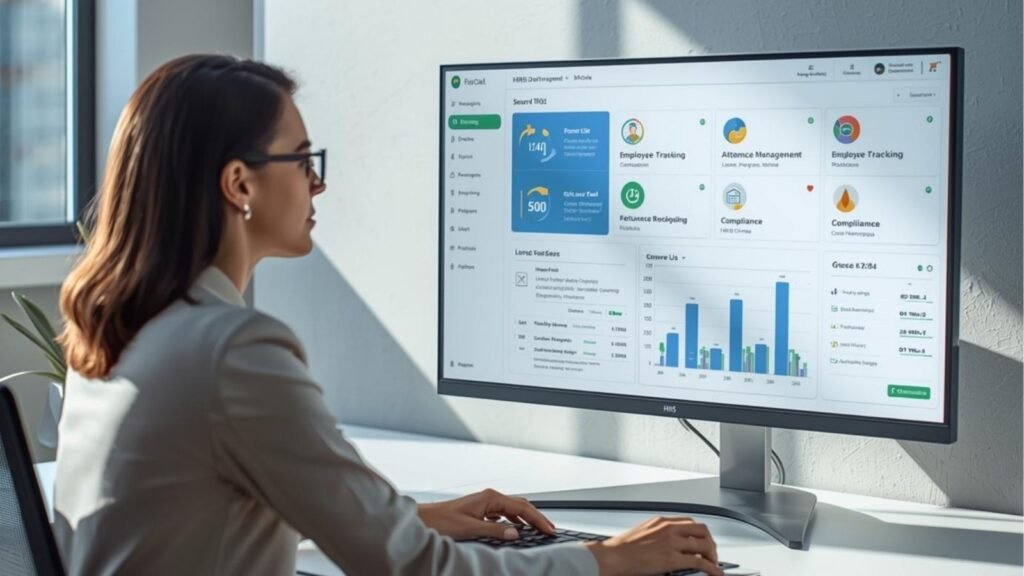
All-in-One HRMS Software for Payroll, Attendance & Employee Management A Human Resource Management System (HRMS) is an integrated digital solution designed to streamline and automate all core HR operations in one platform. This HRMS product simplifies workforce management by centralizing employee data, payroll processing, attendance tracking, and leave management. The system eliminates manual HR processes and Excel-based tracking by offering real-time insights, automated workflows, and accurate reporting. From employee onboarding to payroll execution and compliance management, HRMS ensures smooth HR operations across the organization. With an intuitive dashboard and role-based access, HR teams can efficiently manage employee records, monitor attendance, process salaries, and handle approvals with ease. The product is scalable and suitable for small, medium, and large organizations. Key Modules Covered in HRMS: Employee Information Management Employee Information Management is the foundation of an HRMS. It centralizes all employee‑related data in one secure and easily accessible system. This includes personal details, contact information, job roles, department assignments, reporting structures, documents, salary components, attendance records, and leave balances. Centralization eliminates duplicate data entry and reduces the risk of inconsistencies. HR teams can instantly access updated employee records without searching through files or spreadsheets. This simplifies onboarding, promotions, transfers, and exits while ensuring data accuracy and confidentiality. Payroll Management Payroll processing is one of the most critical and sensitive HR functions. Even minor errors can affect employee trust and lead to compliance issues. Automated Payroll Management within an HRMS removes the complexity of manual salary calculations. Automation reduces payroll processing time, minimizes errors, and ensures consistency across departments. It also helps HR teams stay compliant with statutory regulations and meet payroll deadlines with confidence. Attendance and Shift Management Accurate attendance tracking is essential for fair payroll processing and workforce planning. An HRMS captures attendance data in real time through biometric devices, mobile applications, or web‑based logins. The system supports multiple shift patterns, rotational shifts, night shifts, and flexible working hours. Late arrivals, early departures, overtime, and absenteeism are tracked automatically. This reduces time theft, prevents manipulation, and ensures transparent attendance records. Managers gain real‑time visibility into employee availability, enabling better scheduling and workload distribution. Leave and Holiday Management Leave management is a core HR function that directly impacts employee satisfaction and productivity. An HRMS automates the entire leave lifecycle—from application and approval to balance updates and reporting. Employees can apply for leave through a self‑service portal and view their available balances in real time. Managers receive instant notifications and can approve or reject requests quickly. Leave policies, accrual rules, carry‑forward limits, and holiday calendars can be customized to suit organizational requirements. This automation ensures fairness, consistency, and transparency while reducing HR workload. Statutory Compliance Management Compliance with labor laws and statutory regulations is mandatory for all organizations. An HRMS helps businesses stay compliant by automating statutory calculations and maintaining structured records. The system supports compliance requirements related to payroll, employee documentation, leave policies, and statutory deductions. Automated compliance reports simplify audits and reduce the risk of penalties or legal disputes. By ensuring consistent policy enforcement, HRMS strengthens governance and organizational credibility. Reports and Analytics Data‑driven decision‑making is a key advantage of an HRMS. Built‑in reports and analytics provide insights into attendance trends, payroll costs, leave utilization, attrition, and workforce performance. HR leaders can use these insights to optimize policies, improve productivity, plan workforce requirements, and control costs. Customizable dashboards allow stakeholders to access relevant information quickly and efficiently. Role‑Based Access Control Data security is critical in HR operations. Role‑Based Access Control ensures that employees, managers, and HR teams can access only the information relevant to their roles. This controlled access protects sensitive data, prevents unauthorized changes, and supports compliance with data protection regulations. It also improves accountability and system governance. Automated Payroll Processing: Automated Payroll Processing eliminates the complexity and risk involved in manual salary calculations. The HRMS automatically calculates salaries based on attendance, working days, overtime, incentives, and deductions such as PF, ESI, TDS, and other statutory components. It generates accurate payslips on time, every payroll cycle, without dependency on spreadsheets. This automation significantly reduces payroll errors, salary delays, and compliance risks. HR teams can process payroll faster, ensure employee trust, and maintain consistency across departments, even as the workforce grows. Centralized Employee Data: Centralized Employee Data management ensures that all employee information is securely stored in one unified system. This includes personal details, employment history, documents, salary structure, attendance records, and leave balances. Instead of maintaining multiple files or systems, HR can access accurate and updated employee information instantly. This improves data security, avoids duplication, reduces administrative effort, and supports smooth onboarding, transfers, and exits. Accurate Attendance Tracking: Accurate Attendance Tracking allows organizations to monitor employee working hours in real time. The HRMS captures attendance through integrated systems such as biometric devices, mobile apps, or web logins. Shift schedules, late arrivals, early departures, overtime, and absenteeism are recorded automatically. This real-time tracking minimizes attendance manipulation, reduces time theft, and ensures fair payroll calculations. HR and managers gain better visibility into workforce availability and productivity. Improved HR Productivity: By automating repetitive HR tasks, the HRMS significantly improves overall HR productivity. Routine activities such as attendance tracking, leave approvals, payroll processing, and report generation are handled automatically by the system. As a result, HR professionals can focus more on strategic initiatives like talent management, employee engagement, performance improvement, and organizational development, rather than spending time on manual data entry. Better Compliance Management: Better Compliance Management ensures that organizations remain aligned with statutory and labor law requirements. The HRMS helps manage compliance related to payroll, employee records, leave policies, and statutory deductions. Automated calculations and structured data storage reduce the risk of non-compliance, penalties, and audit issues. HR teams can easily generate compliance reports and maintain accurate records required by regulatory authorities. Data-Driven Decisions: The HRMS provides comprehensive reports and analytics that help HR leaders make informed decisions. With access to real-time data on attendance trends, payroll costs, attrition, and workforce performance, organizations can identify patterns and areas for improvement. These

