Payroll management is one of the most critical functions in any business. Whether you run a startup or a large enterprise, ensuring employees are paid accurately and on time directly impacts employee satisfaction, compliance, and overall business efficiency.
In 2026, payroll is no longer just about calculating salaries. It has evolved into a strategic function powered by automation, cloud software, and compliance-driven processes. Businesses are increasingly adopting payroll software to reduce errors, stay compliant with regulations, and improve operational efficiency.
This guide explains everything you need to know about payroll management, its components, benefits, and how automation is transforming the process.
Payroll management refers to the process of calculating, managing, and distributing employee salaries. It includes handling wages, bonuses, deductions, taxes, and statutory compliance.
A well-managed payroll system ensures:
Traditionally, payroll was handled manually or through spreadsheets. However, modern businesses now rely on payroll software to streamline and automate the entire process.
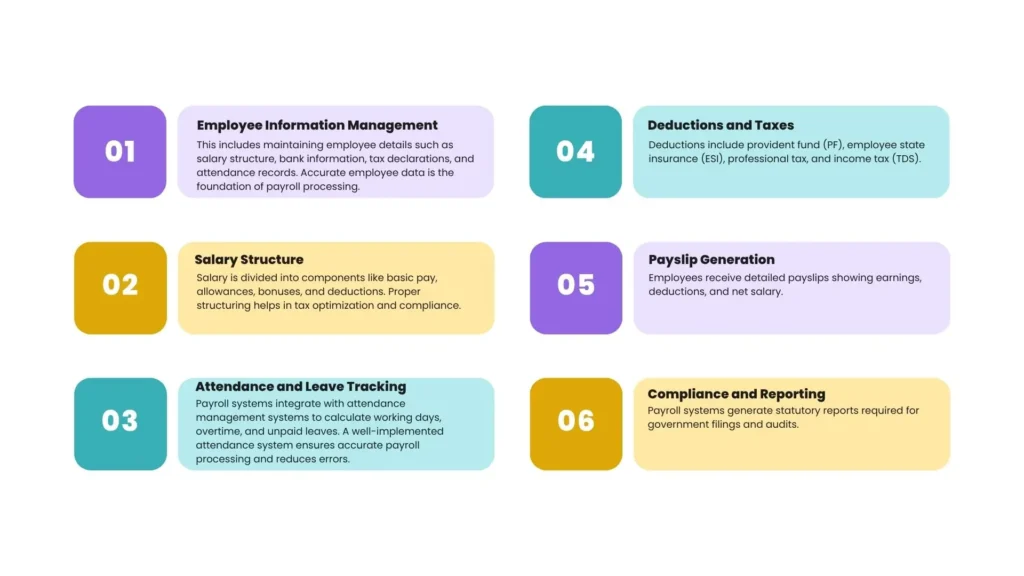
A payroll system consists of key components that ensure smooth and accurate salary processing within an organization. It includes managing employee information, defining salary structures, tracking attendance and leaves, and handling deductions such as taxes and statutory contributions. Additionally, it generates payslips and ensures compliance with legal regulations, making payroll operations efficient, transparent, and error-free.






Modern payroll software automates salary calculations based on predefined rules. It reduces manual work and ensures accurate payroll every month.
Payroll software integrates seamlessly with HR modules like attendance management leave, and employee management.
Additional key features include:
These features make payroll software an essential tool for businesses aiming to scale efficiently.
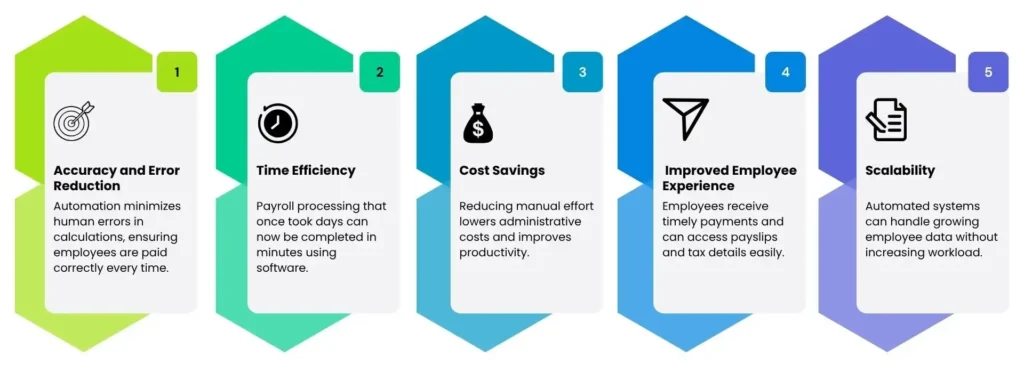
Automation in payroll management brings significant benefits by improving accuracy, efficiency, and overall productivity. It reduces manual errors in salary calculations, ensures timely payments, and simplifies complex processes like tax deductions and compliance. Additionally, automation saves time and operational costs while enhancing employee experience through quick access to payslips and transparent payroll information.
Payroll software plays a vital role in modern business operations by simplifying complex processes.
Here’s how it helps:
For software businesses like yours, offering payroll solutions adds immense value by helping clients streamline operations and improve efficiency.
Payroll management has evolved beyond a routine administrative function into a critical driver of business efficiency, compliance, and employee satisfaction. With increasing complexity in labor laws and workforce operations, relying on manual processes is no longer practical. Businesses must adopt modern payroll solutions integrated with systems like attendance management to ensure accurate salary calculations and seamless workforce tracking. By leveraging automation and tools such as Attendance Management Systems, organizations can reduce errors, stay compliant, and build a more transparent and efficient payroll process. Investing in the right technology today will empower businesses for sustainable growth in 2026 and beyond.
Adaptive leads in ERP solutions, transforming business growth through collaboration, transparency, and innovative strategies that keep clients ahead of the competition
© 2025 Adaptive System Pvt Ltd. All Rights Reserved.