

HRMS Made Simple
Human Resource Management Systems (HRMS) streamline and automate core HR functions like payroll, attendance, and employee management.
Introduction to HRMS Systems :
Human Resource Management Systems (HRMS) are increasingly being adopted by organisations to manage complex workforce operations efficiently.
As businesses continue to grow and evolve, traditional manual HR practices are found to be inefficient, time-consuming, and prone to errors. To address these challenges, HRMS software is implemented to automate and centralise HR functions.
HRMS is designed to manage employee data, payroll processing, attendance tracking, recruitment workflows, performance management, and statutory compliance within a single digital platform.
Through automation and data integration, HR operations are streamlined, and organisational productivity is enhanced.
Table of Content:
- What are the common functions of HRMS systems?
- How can an HRMS software benefit an Organization?
- How to find right HRMS software for you
- The business value of the HRMS software
- Adaptive HRMS for you
What Are the Common Functions of HRMS Systems?
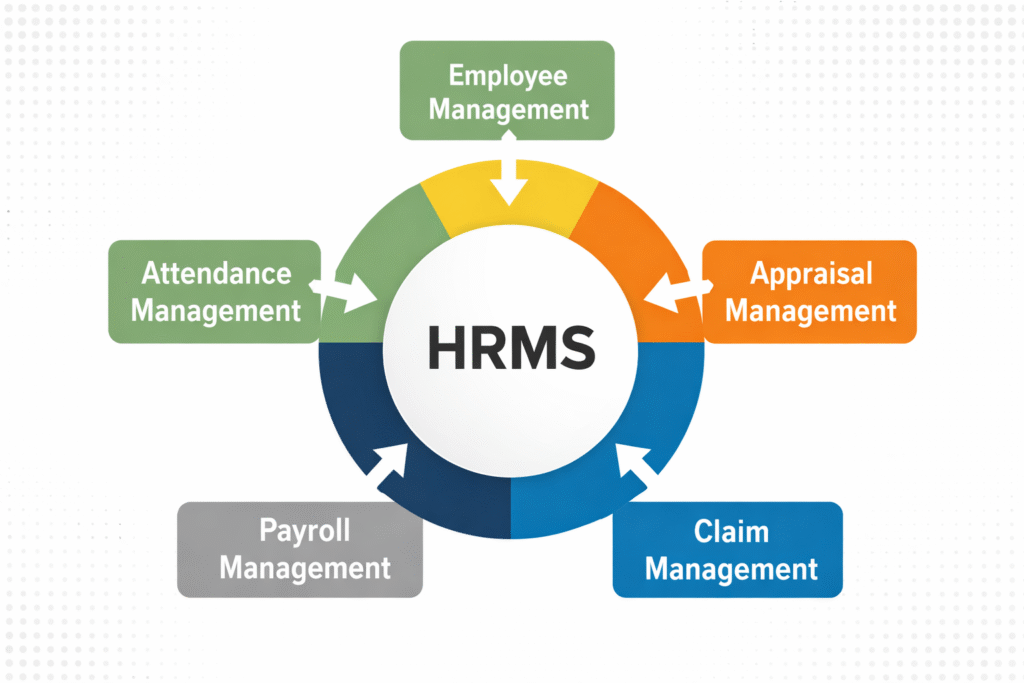
Employee Information Management
HRMS acts as a centralized repository for all employee records, including personal details, job roles, compensation history, and documents. This ensures accuracy, quick access, and consistent data across departments. Centralization also reduces dependency on manual files and scattered spreadsheets.
Attendance and Leave Management
HRMS tracks working hours, shifts, overtime, and leave balances in real time. Employees can apply for leave through the system, while managers can approve requests without delays. This automation improves transparency and ensures accurate payroll calculations.
Payroll Processing and Compliance
Payroll modules calculate salaries, deductions, bonuses, and statutory contributions automatically. The system ensures timely salary disbursement while adhering to tax and labor regulations. Built-in compliance features reduce errors and legal risks.
Recruitment and Onboarding
HRMS streamlines hiring by managing job postings, candidate data, interview scheduling, and selection workflows. Once hired, onboarding tools help new employees complete documentation and understand company policies smoothly.
Appraisal Management
Performance tracking tools allow goal setting, continuous feedback, and structured appraisals. Managers can evaluate employee contributions objectively using measurable criteria. This encourages accountability and professional growth.
Claim Management
Claim management in HRMS simplifies the process of submitting, reviewing, and approving employee expense claims. Employees can upload bills and track claim status digitally without paperwork. Automated validation ensures policy compliance and reduces errors or delays. This improves transparency and speeds up reimbursements for employees.
How Can an HRMS Software Benefit an Organization?
Reduced Administrative Workload
HRMS automates repetitive HR activities such as attendance tracking, payroll processing, and leave approvals. This significantly reduces dependency on manual paperwork and spreadsheets. HR teams can complete routine tasks faster with fewer errors. As a result, they can focus more on employee development and strategic HR planning.
Improved Accuracy and Consistency
Automated workflows eliminate calculation mistakes commonly caused by manual data entry. Centralized records ensure uniform data is used across payroll, attendance, and compliance. This consistency improves reporting accuracy and reduces discrepancies. Reliable data builds confidence in HR and financial operations.
Enhanced Employee Experience
HRMS empowers employees through self-service access to HR information and requests. They can view payslips, apply for leave, and update details without HR intervention. This reduces response delays and improves transparency. A smooth experience increases employee satisfaction and engagement.
Stronger Decision-Making Support
HRMS provides real-time dashboards and detailed workforce reports. Management gains clear visibility into performance, attendance, and workforce costs. Accurate insights support faster and smarter decisions. This data-driven approach reduces reliance on assumptions.
Better Compliance and Data Security
Sensitive employee information is protected through role-based access and secure storage. HRMS maintains audit trails and compliance records automatically. This reduces the risk of legal penalties and data breaches. Secure systems build trust and ensure regulatory adherence.
How to Find the Right HRMS for You
Understand Your HR Challenges
Begin by identifying gaps in your current HR processes. Issues like payroll delays, attendance mismatches, or manual appraisals indicate automation needs. Understanding challenges helps define clear expectations. This ensures the HRMS solves real operational problems.
Define Functional Requirements
List the HR functions that are critical to your business operations. Focus on modules that align with your workforce size and processes. Avoid selecting features that add complexity without value. A focused approach improves system adoption.
Evaluate Ease of Use
User-friendly design plays a major role in HRMS success. Employees and managers should navigate the system without extensive training. Simple interfaces improve daily usage and reduce errors. Ease of use ensures faster acceptance across teams.
Check Scalability
A good HRMS should grow alongside your organization. It must handle increased users, data volume, and new HR processes smoothly. Scalable systems prevent frequent replacements. This protects long-term investment value.
Assess Vendor Support
Implementation support determines how smoothly the system is adopted. Reliable vendors provide training, updates, and quick issue resolution. Ongoing support ensures uninterrupted operations. Strong assistance reduces long-term system risks.
Review Cost vs Value
Evaluate costs beyond licensing, including implementation and maintenance. Compare these costs with productivity improvements and time savings. The right HRMS should deliver measurable returns. Value matters more than the lowest price.
The Business Value of HRMS Software
Centralized Workforce Management
HRMS consolidates all employee information into a single, organized system. This removes dependency on multiple tools and scattered records. HR, finance, and leadership teams can access consistent data when needed. Centralization improves coordination and operational clarity.
Operational Efficiency and Speed
Automated HR workflows reduce delays in routine processes like approvals and payroll. Tasks that once required manual follow-ups are completed faster. This improves turnaround time across departments. Overall productivity increases with streamlined operations.
Strategic Workforce Planning
HRMS offers clear insights into employee performance, skills, and work patterns. Leaders can identify talent gaps and future staffing needs more accurately. This supports informed hiring and training decisions. Workforce planning becomes proactive rather than reactive.
Regulatory Compliance
HRMS maintains structured records aligned with statutory and organizational requirements. Automated documentation supports accurate reporting and timely submissions. Consistent compliance reduces administrative complexity. Businesses can focus more on growth initiatives.
Employee Engagement and Transparency
Employees gain easy access to HR information through self-service tools. Clear visibility into attendance, payroll, and policies builds trust. Transparent processes encourage accountability. Engaged employees contribute more effectively to organizational goals.
Adaptive HRMS for you
Adaptive HRMS is designed to meet the evolving needs of modern businesses by simplifying and automating human resource management processes. As organisations grow, managing employees, attendance, payroll, and performance manually becomes time-consuming and error-prone. With Adaptive HRMS, HR operations are streamlined through a centralised and intelligent system that improves accuracy and efficiency.
To discover how Adaptive HRMS can simplify your HR operations and support business growth, explore our complete solution at https://adaptivebizapp.in/

